
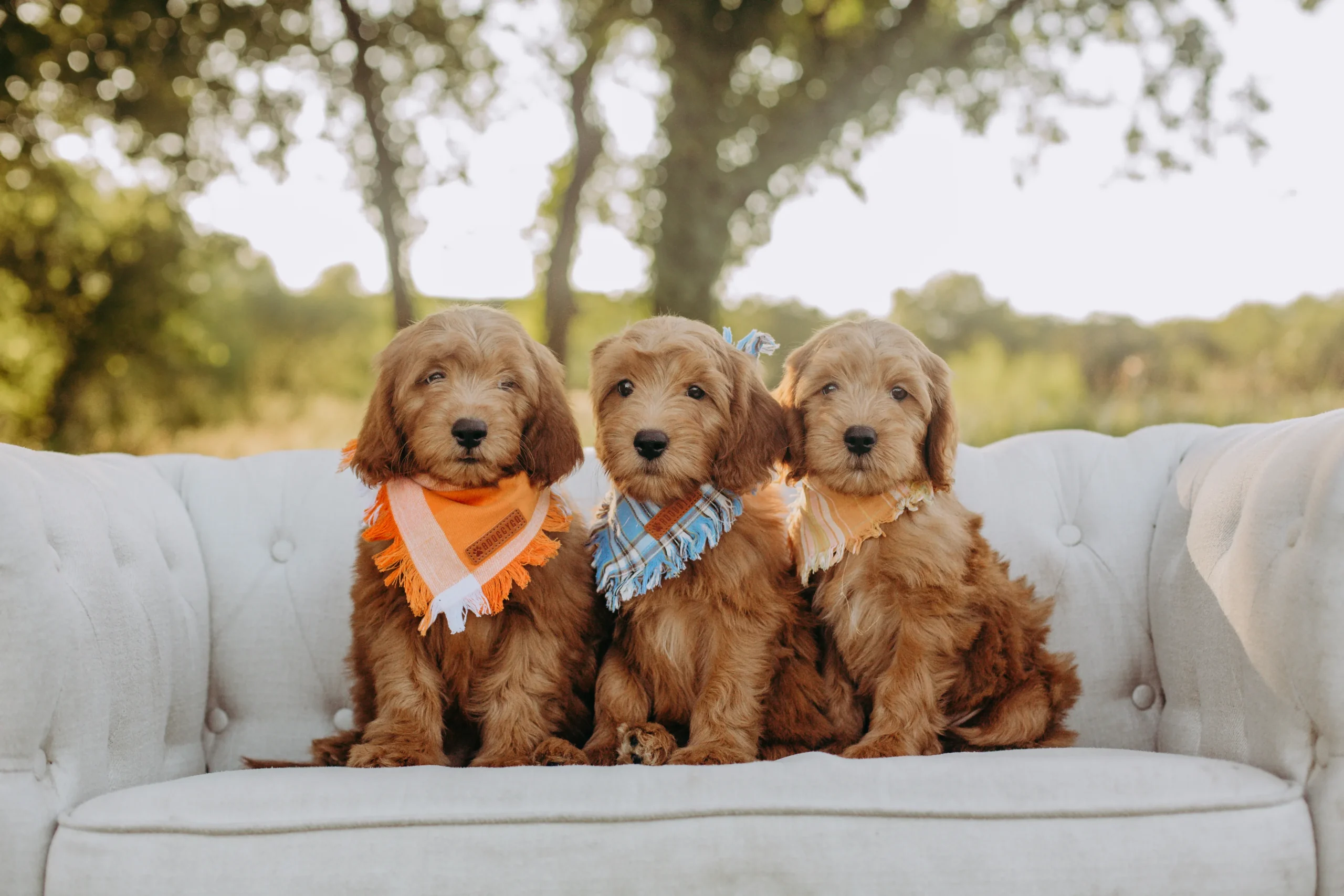
F1 vs F1B Goldendoodles: coats, shedding and the right fit
Every Goldendoodle listing comes with a code: F1, F1B, sometimes F2. Those letters describe the mix of Golden Retriever and Poodle in the litter, and they are the best predictor of coat, shedding and grooming. Here is what they mean in plain English, from a family that raises both.
F1 Goldendoodle
50% Golden Retriever · 50% Poodle
- Coat
- Loose waves to shaggy, the classic teddy-bear look
- Shedding
- Light, but a little more than an F1B
- Grooming
- Easiest: brushing a couple of times a week
- Best for
- Families who love the scruffy golden look and easy coat care
F1B Goldendoodle
75% Poodle · 25% Golden Retriever
- Coat
- Curlier and plusher, closer to the Poodle
- Shedding
- The lightest shedding of the two
- Grooming
- More brushing, and regular professional grooms
- Best for
- Allergy-sensitive households and curl lovers
What the letters actually mean
F1 means first generation: one Golden Retriever parent, one Poodle parent, a straight 50/50 cross. F1B means an F1 Goldendoodle bred back to a Poodle, which makes the puppies roughly 75% Poodle. That extra Poodle is why F1B coats curl tighter and shed less. You will occasionally see F2 (two F1 parents) and multigen doodles, but F1 and F1B cover almost everything we raise at Lonestar, including our English Cream lines.
Shedding and allergies, honestly
No dog is truly hypoallergenic, and any breeder who promises that is selling something. What generation changes is the odds. F1B Goldendoodles inherit more of the Poodle's tight, hair-like coat, so they shed the least and tend to sit best with allergy-sensitive families. F1 coats still shed far less than a Golden Retriever's, but you may find the occasional tumbleweed. If allergies are a serious concern in your house, tell us on your application: we will steer you toward the curlier puppies in a litter, because coat varies puppy to puppy even within a generation.
Grooming: the honest tradeoff
The rule of thumb is simple: the less a coat sheds, the more you brush it. Loose F1 waves are forgiving with a couple of brushing sessions a week. Curly F1B coats hold onto loose hair instead of dropping it, so they need brushing every day or two plus a professional groom every six to eight weeks, or the coat mats. Neither is hard once it is routine, and our puppies get daily handling from birth so the brush is an old friend before they ever go home.
Which one should your family pick?
Pick F1 if you love the shaggy teddy-bear look, want the simplest grooming, and nobody in the house has significant allergies. Pick F1B if allergies are a factor, or you prefer the plush, curly coat and do not mind the grooming and brushing to keep their coat healthy. Temperament is not the deciding factor: both generations are smart, social family dogs, and the differences between individual puppies in a litter are bigger than the differences between generations. That is why we help you choose on temperament first and weigh coat and generation from there.
F1 vs F1B quick answers
Do F1B doodles shed less than F1?
Yes. F1B puppies are about 75% Poodle, so their curlier coats shed the least. F1 coats still shed very little compared to a Golden Retriever, just a bit more than an F1B.
Which doodle generation is best for allergies?
F1B is the safer bet for allergy-sensitive families because of the higher Poodle percentage. No dog is 100% hypoallergenic, so tell us about allergies on your application and we will point you to puppies that match your needs.
Do F1 and F1B Goldendoodles cost the same?
At Lonestar both generations are priced in the same range — size and coat matter more than generation. Current prices are always on our Available Doodles page.
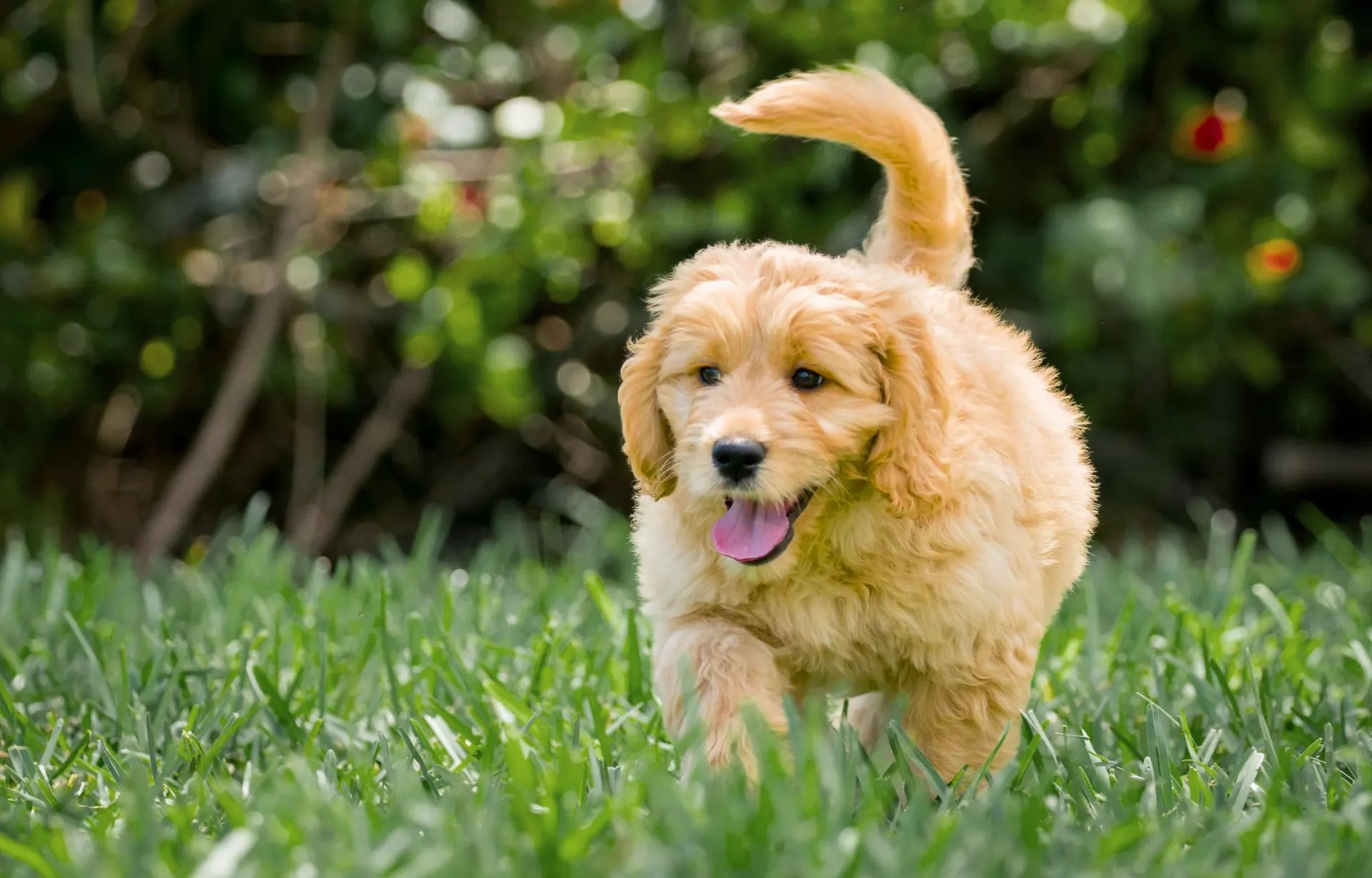
Let us help you choose.
We raise F1 and F1B puppies and can help you choose based on coat, allergies, and lifestyle.